Seagulls and Nesting Birds on Portsmouth Roofs: The Law, the Damage, and Proofing Costs
Every Portsmouth homeowner knows the noise. What fewer people realise is what is happening underneath it. A herring gull pair returning to the same chimney stack or flat roof year after year will, over a decade, cause several thousand pounds of damage - blocked hoppers, corroded lead, saturated flat roof insulation, and in a few cases a collapsed ceiling. Portsmouth has one of the densest urban gull populations in the UK, with the city's roofscape offering close to ideal nesting conditions: flat and low-pitch roofs, warm chimney stacks, no ground predators, and a reliable food supply. Herring gull numbers on natural coastal cliffs have fallen sharply enough that the species is red-listed, while urban colonies have grown. That combination produces the thing that catches people out most: the birds causing your problem are legally protected, and doing the obvious thing at the wrong time of year is a criminal offence. Here is how to deal with it properly.
What Gulls Actually Do to a Portsmouth Roof
The damage is cumulative and mostly invisible from the ground, which is why it tends to be discovered as a leak rather than as a bird problem.
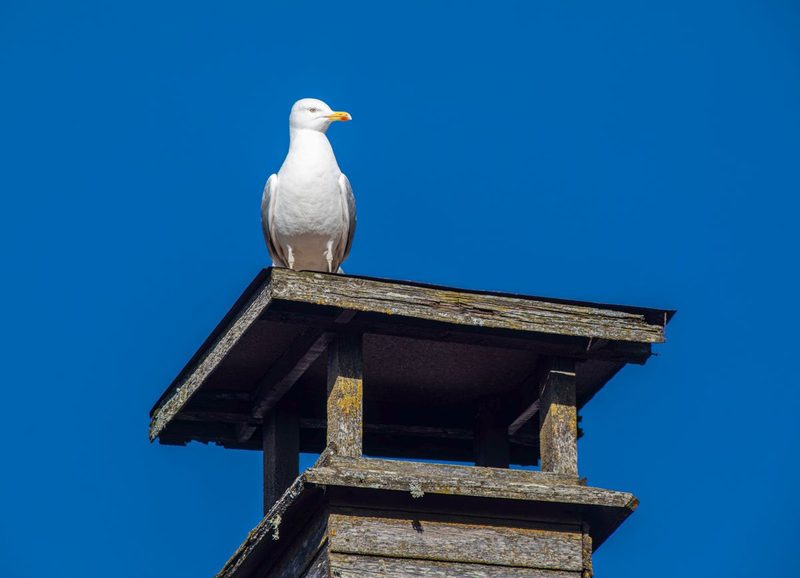
Nest material is the main culprit. A single herring gull nest is a substantial construction - typically 400 - 600mm across, built from grass, seaweed, twigs, plastic and whatever else is available, and rebuilt and added to every season. Gulls do not build on the roof surface by preference, they build in the sheltered spots: behind chimney stacks, in the valley between two roof planes, in parapet gutters, and against the upstand where a flat roof meets a wall. All four of those are drainage points. A nest sitting in a valley or a parapet gutter dams it completely, and water that should be running to a downpipe instead backs up over the flashing upstand and into the building.
Then there is the droppings problem, which is more than aesthetic. Gull guano is acidic, typically around pH 3 - 4.5, and it attacks the things roofs are made of. On lead flashings it accelerates corrosion and causes white oxide bloom. On bituminous felt it breaks down the surface dressing and shortens the life of the covering by years. On zinc and galvanised steel it eats the protective coating. A flat roof with a long-established gull population above it will often need recovering 5 - 8 years earlier than it otherwise would.
Blocked hoppers and downpipes are the third route in. Nest material, feathers and general debris pack the top of a hopper head until it overflows down the wall face, which on Portsmouth's older properties saturates solid brickwork and produces internal damp that gets misdiagnosed as rising damp or condensation for years. If you have persistent damp on an upper wall with no obvious roof fault, a look at the hoppers is worth doing before anything else - Roof Repairs Portsmouth can usually check the whole roofline and the nesting points in a single visit.
The Cost of Leaving It
Rough figures for what accumulated gull damage costs to put right in Portsmouth: clearing nest material and debris from valleys and hoppers, £180 - £400. Replacing corroded lead flashing around a stack, £350 - £750. Recovering a small flat roof that has been degraded early, £1,800 - £3,500. Repairing internal damage from a long-running overflow - plaster, decoration, occasionally a ceiling - £400 - £2,000. None of that is dramatic on its own. Together, across ten years, it adds up quickly.
The Law: What You Can and Cannot Do
This is the part where good intentions get people into trouble, so it is worth being precise.
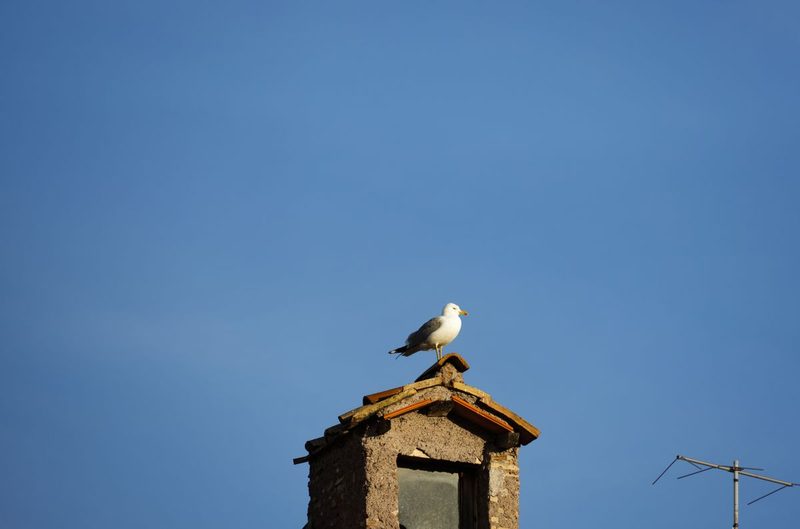
All wild birds, their active nests and their eggs are protected under the Wildlife and Countryside Act 1981. It is an offence to intentionally kill or injure a wild bird, or to take, damage or destroy an active nest or its eggs. An active nest means one that is being built or is in use. The full text of the Wildlife and Countryside Act sets out the offences, and penalties can include unlimited fines and up to six months' imprisonment per offence - and each egg counts separately.
Herring gulls and lesser black-backed gulls, the two species you will mostly be dealing with in Portsmouth, have additional significance because both are on the UK conservation red list. Licences that once allowed routine control have been substantially tightened in recent years, and general licences no longer cover these species for most purposes. Anything beyond passive proofing now generally requires an individual licence application, assessed case by case, and granted only where there is a genuine public health or safety justification and no reasonable alternative. Natural England administers this, and the bird licensing collection on GOV.UK is where the current position is published.
What all this means in practice is simple. Removing an active nest with eggs or chicks is illegal without a licence, full stop. Proofing a roof so that birds cannot nest there in the first place is entirely legal, at any time, provided no active nest is disturbed in the process.
The Window That Matters
Gull breeding season in Portsmouth runs roughly from late March, when pairs return and begin nest-building, to late August when the last chicks fledge. That leaves September through February as the window where proofing work can be carried out without any risk of encountering an active nest.
Which makes right now - September into early winter - the correct time of year to do this. Leave it until April and you are either postponing for five months or you are looking at a licence application. Portsmouth roofing firms know this and their gull-proofing diaries fill up through autumn accordingly.
What Proofing Actually Involves
The principle is to remove the flat, sheltered surfaces gulls need, without creating a hazard for the birds or making the roof harder to maintain.
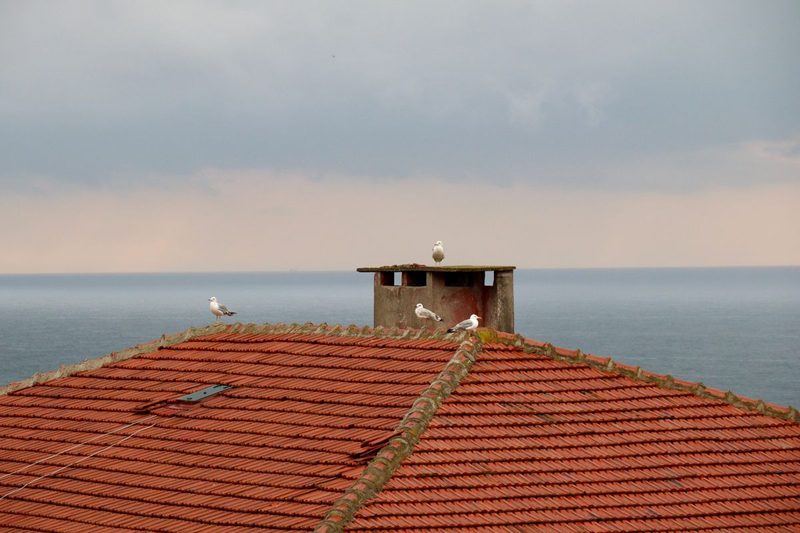
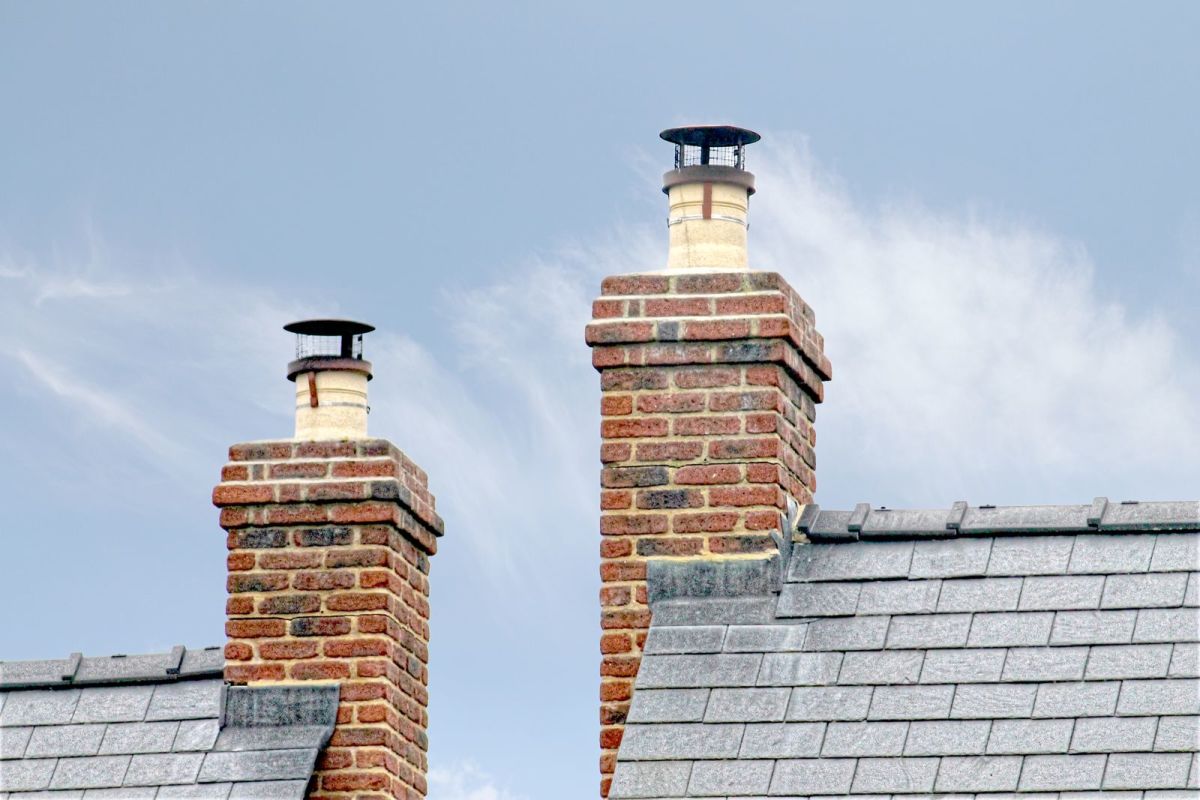
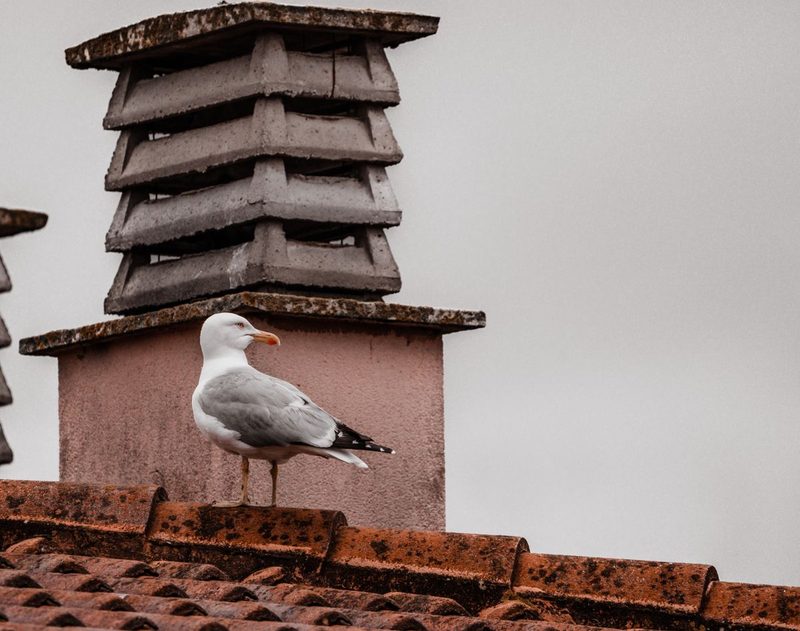
Post and wire systems are the standard approach for chimney stacks and parapets. Stainless steel posts are fixed into mortar joints and a fine wire run between them at 50 - 100mm above the surface, which prevents a bird settling without trapping anything. On a typical Portsmouth stack this runs £180 - £400 fitted. It is unobtrusive, near-invisible from the street, and lasts fifteen years or more if stainless fixings are used.
Netting is used for larger flat areas, light wells, and the recessed valleys common on Victorian terraces. Properly installed netting is tensioned across a perimeter of fixings so there is no slack for a bird to become entangled in - badly installed netting is both ineffective and genuinely cruel, and it is the single most common thing done wrong. Expect £25 - £45 per square metre for professional installation. A typical light well or small flat roof area comes to £400 - £1,200.
Spikes work on narrow ledges, ridge lines and parapet copings, but they are largely useless against gulls on wide surfaces - a gull will simply build the nest on top of the spikes if the area is big enough. Anyone quoting spikes for a large flat roof either does not know gulls or is hoping you do not.
The Bits That Get Missed
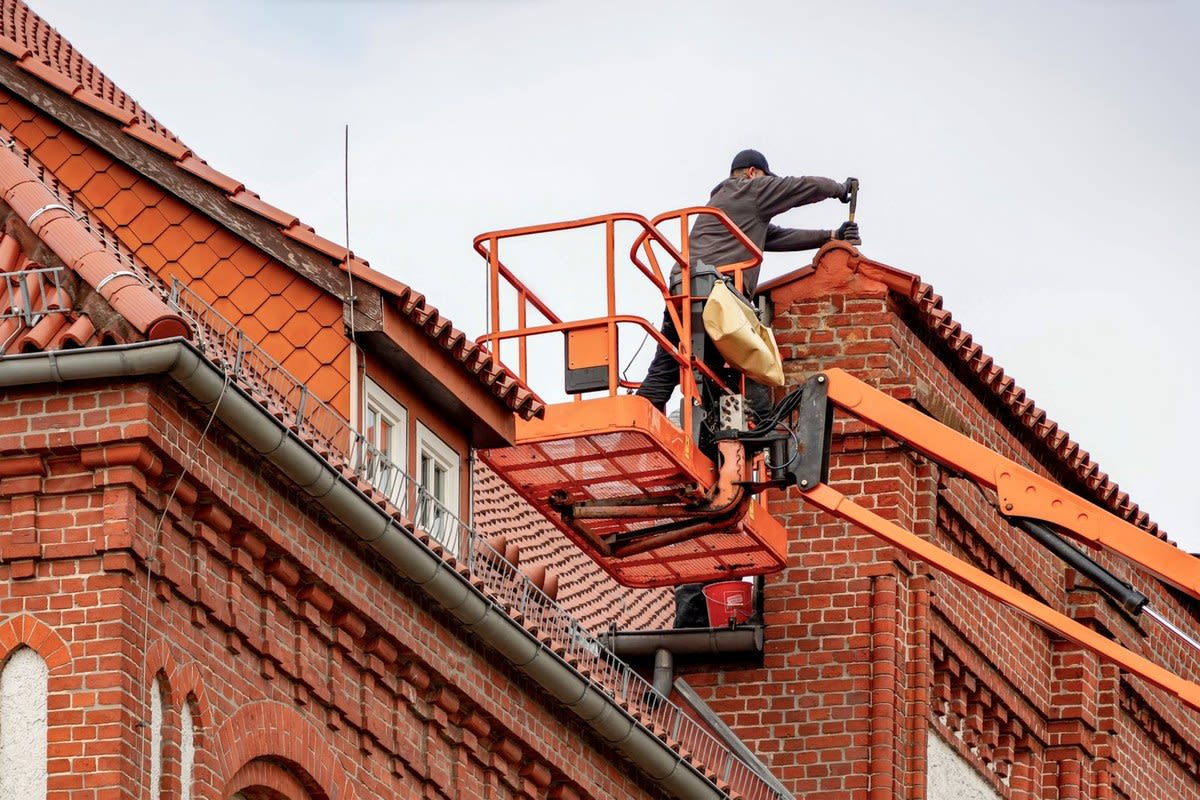
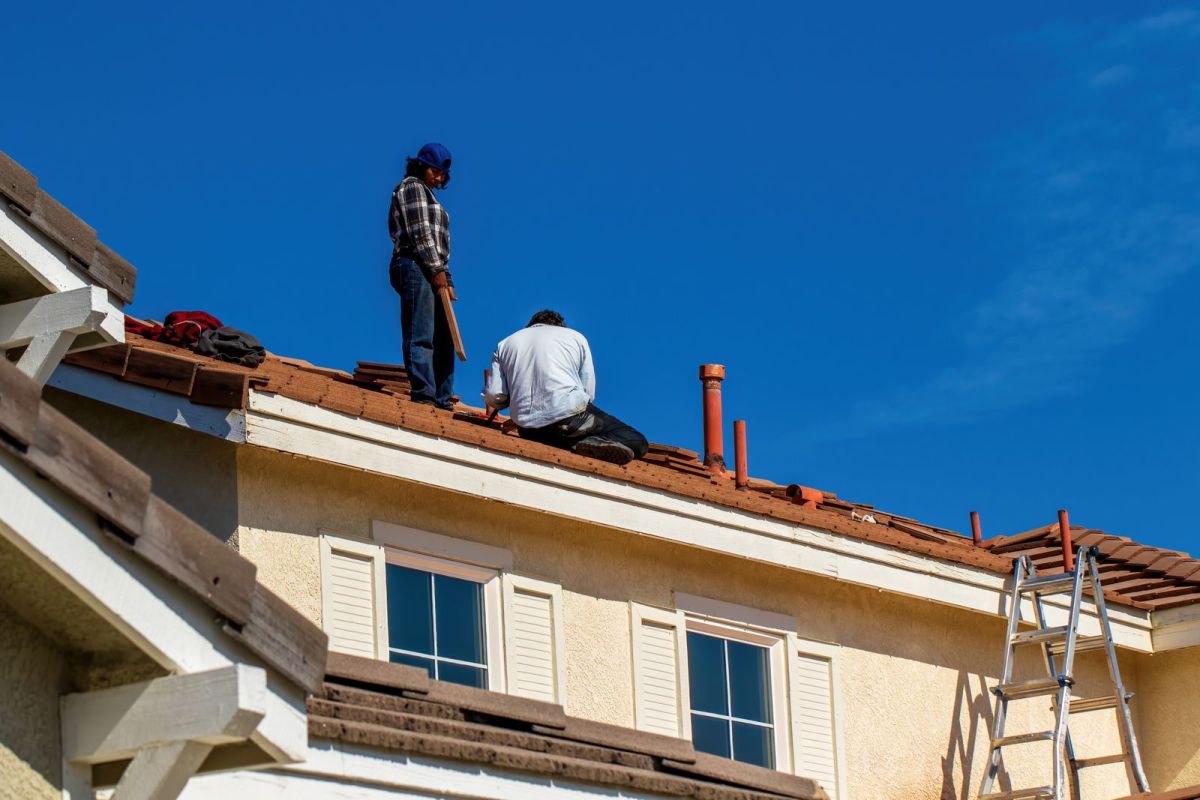
Two things commonly get skipped and then undermine the whole job. Hopper heads and open gutters need proofing too, usually with a mesh cage or a hopper guard, because an unprotected hopper is a perfectly good nest site. And ridge and hip lines on the older Portsmouth terraces need checking, because a gull will use a broken ridge tile as an anchor point. Any proofing job is worth combining with the roofline repairs it exposes - we have covered what those cost in our guide to gutters, fascias and soffits in Portsmouth.
Why Portsmouth Is Worse Than Almost Anywhere
Portsmouth's gull problem is not imagined and it is not equal to other south coast towns. Several local factors compound.
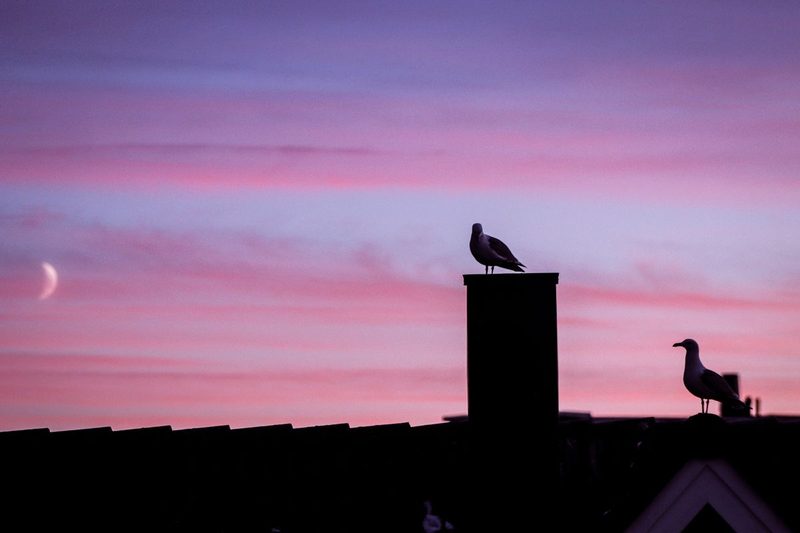
The city is the most densely populated in the UK outside London, and almost entirely built on Portsea Island. That density means a huge continuous roofscape with very little green space breaking it up, which is functionally a substitute cliff colony. Gulls are colonial nesters - they want neighbours - and a dense terraced roofscape provides exactly that.
The climate helps them too. Portsmouth is one of the warmest and sunniest parts of the UK, averaging roughly 1,750 - 1,900 hours of sunshine a year and a comparatively mild winter with a January mean around 5 - 7°C and relatively few air frosts. Mild winters improve overwinter survival, which means more breeding adults returning each spring. Rainfall is low by UK standards at around 700 - 750mm, so nests dry out and persist between seasons rather than rotting down.
Then there is salt. The marine environment already corrodes roofing materials faster here than inland - lead, zinc, steel fixings and mortar all weather more quickly within a kilometre or two of the water. Add acidic guano on top of salt exposure and the degradation compounds. A Portsmouth seafront roof is working in genuinely harsh conditions before a single gull lands on it.
Local roofing supply is another factor worth planning around. Portsmouth, Gosport, Havant and Fareham have a decent number of roofing contractors, but height-access work with proper edge protection is a specialist subset, and firms properly equipped for parapet and chimney proofing on multi-storey terraces are fewer. Booking 3 - 5 weeks ahead in autumn is realistic.
Things Not to Do
A short list, because all of these are common and all are counterproductive.
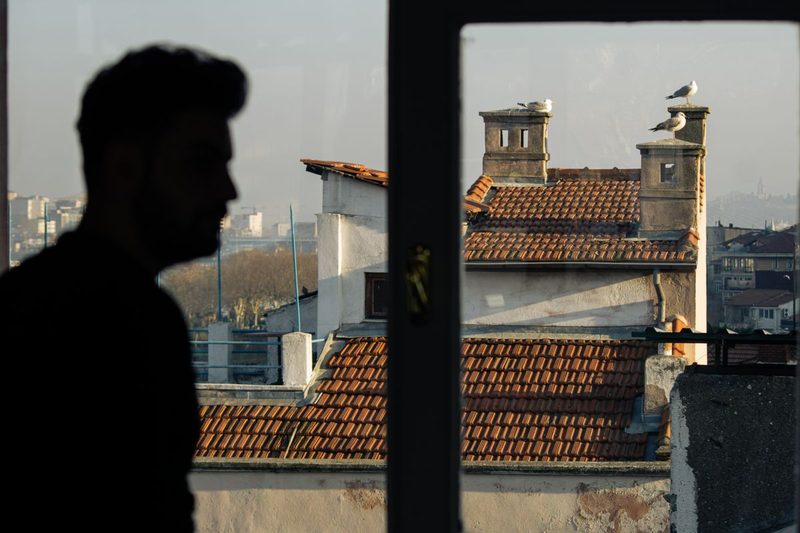
Do not feed them, obviously, and try to get neighbours not to either. Do not use gel or sticky repellents, which trap birds and small mammals and are widely considered inhumane. Do not remove a nest between late March and August without checking whether it is active - the fine applies per egg. Do not use ultrasonic deterrents, which have essentially no evidence base for gulls and will take your money cheerfully. And do not block a roof vent or a flue while proofing, which happens more often than it should and creates a carbon monoxide or condensation problem in place of a bird problem.
Bin management matters more than most deterrents. Portsmouth's gull population is sustained substantially by domestic and commercial waste, and gull-proof sacks and closed bins reduce the food supply that makes the roofscape worth colonising. It is a slow lever, but it is the only one that reduces the population rather than just moving it next door.
Frequently Asked Questions
Is it illegal to remove a seagull nest from my roof in Portsmouth? It is illegal to remove or destroy an active nest - one being built or in use, with eggs or chicks - without a licence. This is covered by the Wildlife and Countryside Act 1981, penalties can include unlimited fines and up to six months' imprisonment, and each egg counts as a separate offence. Herring and lesser black-backed gulls are red-listed, so licences are now granted only case by case. Removing an empty, disused nest outside the breeding season is legal.
When can gull proofing be carried out? Between September and February, outside the breeding season, which in Portsmouth runs roughly from late March to late August. Proofing itself is legal year-round, but during breeding season you risk encountering an active nest, which stops the work. Autumn is the standard window and local roofing firms book up accordingly, so 3 - 5 weeks' notice is realistic.
How much does seagull proofing cost in Portsmouth? A post and wire system on a typical chimney stack is £180 - £400 fitted. Netting for a flat roof area, light well or valley runs £25 - £45 per square metre, so a typical area comes to £400 - £1,200. Hopper guards and mesh cages add £40 - £90 per hopper. Against that, accumulated gull damage over a decade - blocked valleys, corroded lead, early flat roof replacement, internal damp - routinely runs into several thousand pounds.
Do spikes work against seagulls? On narrow ledges, ridge lines and parapet copings, yes. On wide flat surfaces, no - a gull will nest on top of the spikes if there is enough area. Anyone proposing spikes as the solution for a large flat roof either does not understand gull behaviour or is banking on you not noticing. Post and wire or properly tensioned netting is the correct answer for open areas.
Can gulls really cause structural damage? Yes, though indirectly. The nest itself dams valleys, parapet gutters and hopper heads, forcing water over flashing upstands and into the building. Guano is acidic at roughly pH 3 - 4.5, which corrodes lead and zinc and degrades bituminous felt, often shortening a flat roof's life by 5 - 8 years. Portsmouth's salt-laden coastal air accelerates all of it. The usual sequence is a persistent damp patch first, and the bird cause identified later.
Ready to work with Roof Repairs Portsmouth?
Let's connect! We’re here to help.
Send us a message and we’ll be in touch.
Or give us a call today at 023 9355 3469
Agency Contact Form
More Marketing Tips, Tricks & Tools