Garage Roof Replacement in Portsmouth: Asbestos Sheets, Felt, EPDM and 2026 Costs
Garage roof replacement in Portsmouth usually starts with a drip on the car bonnet, a sagging felt deck or a grey corrugated roof that someone tells you "might be asbestos". As roofing jobs go, it's one of the cheaper ones. A single garage roof is only around 15-18m², and most come in at £1,100-£2,500 all in. Where the price jumps is asbestos. Asbestos cement was used in UK building right up until the ban in 1999, so a garage built before 2000, especially one in a rear lane or a block behind a row of terraces, has a fair chance of having it. Then there's the weather. Portsea Island takes south-westerly gales straight off the Channel, and the salt in that air eats through cheap steel fixings in a few years. This guide covers how to tell what roof you've got, how the asbestos question works, which materials suit the coast and what single and double garages cost in 2026.
What Garage Roof Replacement in Portsmouth Involves
Most garages in the city have one of three roof types, and the job is quite different for each. Before you get any quotes it helps to know which one you're looking at.
Corrugated asbestos cement sheet
Grey, wavy sheets with a slightly rough, chalky surface, often with moss or lichen growing on them. They were standard on prefabricated concrete garages and garage blocks from the 1950s through to the late 1990s. The sheets are usually around 10-15% asbestos fibre bound into cement. Left alone and in one piece they're fairly low risk. They do go brittle with age, though, and they won't take a person's weight. People fall through fragile garage and shed roofs every year, so don't climb up for a closer look.
Felt on a timber deck
A flat roof, usually with a very slight fall to one side, covered in mineral felt over chipboard or plywood boards. This is common on brick-built garages attached to 1930s semis and 1960s-1980s houses. Older felt lasts 10-20 years, and by the time it fails the deck underneath has often soaked up water and gone soft. Press on the ceiling boards from inside: if they bow or feel spongy, the deck needs replacing as well as the covering.
Pitched tiled roof
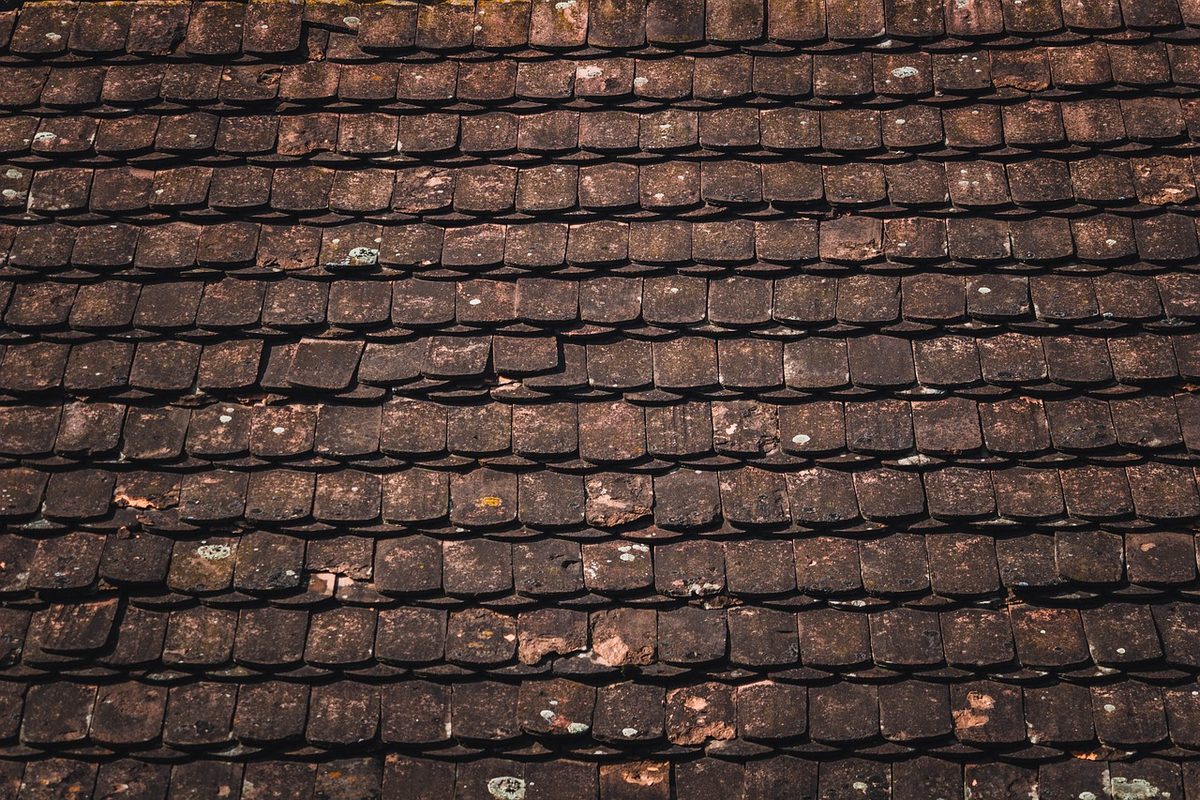
Some detached garages, particularly on larger interwar and post-war homes, have a small pitched roof with concrete tiles or slates. These are re-roofed like a mini house roof, with new battens, breathable membrane and tiles, and cost the most per square metre.
If you're not sure which you've got, or whether yours is worth saving, Roof Repairs Portsmouth can take a look and tell you what it is before you spend anything on testing or quotes.
The Asbestos Question: Testing, Removal and Disposal
A grey corrugated garage roof doesn't automatically mean asbestos. Fibre cement sheets made after 1999 look almost the same. The only way to know is a sample test, which typically costs £50-£100 per sample through a UKAS-accredited lab, or £200-£350 if you want a surveyor to take the sample and write a short report.
Who is allowed to remove it
Asbestos cement is classed as lower risk than materials like lagging or insulating board, so removing it is normally non-licensed work. That means it doesn't need a licensed asbestos contractor, but anyone doing it as part of their job must be trained and follow set methods. The HSE's guidance on non-licensed asbestos work explains how the categories work. On site, the rules are simple: wet the sheets down, unbolt them rather than smashing them, lower them whole, and never use a power tool or a jet washer on them. The HSE task sheet for removing asbestos cement sheets sets out the full step-by-step method that a competent roofer should be following.
Disposal costs and the tip
Removed sheets have to be double-wrapped in heavy-duty polythene, labelled and taken to a site licensed to accept asbestos. Don't assume the local tip will take it. Many council recycling centres either refuse asbestos or accept small, wrapped quantities by arrangement, so check with Portsmouth City Council before you load anything into a car. For a contractor, removal and disposal of a single garage roof usually adds £500-£1,100 to the job, and £900-£1,800 for a double. That covers labour, wrapping, transport and the waste site's fee.
Garage Roof Replacement Materials Compared
Once the old roof is off there are six realistic options. Which one suits you depends on whether the garage has a timber deck, how much you care about drips and condensation, and how long you plan to stay in the house.
Flat membranes: EPDM, GRP and torch-on felt
EPDM is a single sheet of rubber bonded to a new deck, so on a small garage there are often no joins at all. It lasts 25-40 years and copes well with the temperature swings and UV on an exposed coastal roof. GRP (fibreglass) gives a hard, walkable finish that lasts 25-30 years, though it can crack if the deck underneath flexes. Torch-on felt is the cheapest of the three and lasts 15-20 years with a good three-layer system.
We've compared these three in much more detail, with lifespans and cost per year, in our guide to flat roof replacement costs in Portsmouth for EPDM, GRP and felt. The same reasoning applies to a garage, just on a smaller roof.
Sheet roofs: steel, composite and bitumen
If you're replacing asbestos sheets on a concrete sectional garage, a sheet roof is usually the simplest swap because it fits the existing purlins. Box-profile steel with a plastisol coating is cheap and strong and lasts 25-40 years. Insulated composite panels (steel skins with a foam core) cost more but stop condensation dead. Bitumen corrugated sheet is the budget option at roughly half the price of steel, though it tends to sag and fade after 15-20 years.
Garage Roof Replacement Costs in Portsmouth for 2026
These are typical installed prices for 2026, including stripping the old roof and taking non-asbestos waste away. A single garage is taken as about 15-18m² of roof and a double as about 30m².

- Torch-on felt (new deck): £1,100 - £1,900 for a single garage, £1,900 - £3,200 for a double, lasting 15-20 years
- EPDM rubber (new deck): £1,400 - £2,400 for a single garage, £2,400 - £4,000 for a double, lasting 25-40 years
- GRP fibreglass (new deck): £1,600 - £2,800 for a single garage, £2,800 - £4,500 for a double, lasting 25-30 years
- Box-profile steel sheet: £900 - £1,600 for a single garage, £1,600 - £2,800 for a double, lasting 25-40 years
- Insulated composite panel: £1,500 - £2,600 for a single garage, £2,600 - £4,200 for a double, lasting 30-40 years
- Bitumen corrugated sheet: £700 - £1,300 for a single garage, £1,200 - £2,200 for a double, lasting 15-20 years
- Pitched tiled re-roof: £3,000 - £5,500 for a single garage, £5,000 - £8,500 for a double, lasting 40-60 years
Add £500-£1,100 (single) or £900-£1,800 (double) for asbestos removal and disposal, and £50-£100 per sample for testing beforehand. If the timber deck is fine and can be overlaid, knock roughly £300-£500 off the felt, EPDM and GRP prices. New fascias and a gutter typically add £250-£600.
Prices at the lower end assume easy access from a driveway. Garages in narrow rear lanes, where everything has to be carried by hand and there's nowhere to put a skip, can add 10-20% to the labour. Portsmouth has a decent supply of roofers who'll take on garage roofs, often as fill-in work between bigger jobs, so lead times of 2-6 weeks are normal. Fewer local firms do their own asbestos removal, and if yours doesn't you may end up booking two contractors, which adds a few days and sometimes a second call-out charge.
Salt Air, Gales and Condensation: What Portsmouth Does to a Garage Roof
Portsmouth gets roughly 700-750mm of rain a year, well under the UK average of about 1,160mm, and its winters are among the mildest in England, with far fewer frosts than inland Hampshire. On paper that's easy on a roof. The problem is the wind. Portsea Island is flat and open to the south-west, and gales coming up the Channel hit a low, lightweight garage roof side-on. Lifted sheet ends and peeled felt edges are the most common storm damage we see on garages.
Wind uplift and fixings
A lightweight sheet roof needs fixings at every purlin and closer spacing at the edges, plus proper verge and eaves trims so the wind can't get underneath. With EPDM and GRP, the edge trims are what keeps the roof on. A cheap job that saves £100 on trims is often the one that peels back in its third winter.
Salt corrosion
Within a mile or two of the sea, uncoated steel and zinc-plated screws can show rust in under five years. Ask for plastisol-coated sheets, stainless or coated fixings, and aluminium or plastic trims. They usually add only £50-£150 to a single garage.
Condensation
An uninsulated steel roof over a cold garage will drip on the inside on many winter mornings, especially if you park a wet car in there. Anti-condensation fleece bonded to the underside of the sheets costs around £3-£6 per m² extra and cuts most of it. If you use the garage as a workshop or store anything that can't get damp, composite panels are worth the extra.
Rear-Lane and Block Garages: Shared Roofs and Ownership
A lot of Portsmouth's Victorian and Edwardian terraces have garages in a lane at the back, and many 1960s and 1970s estates have blocks of 6-20 garages in a row. These raise questions a detached garage doesn't.
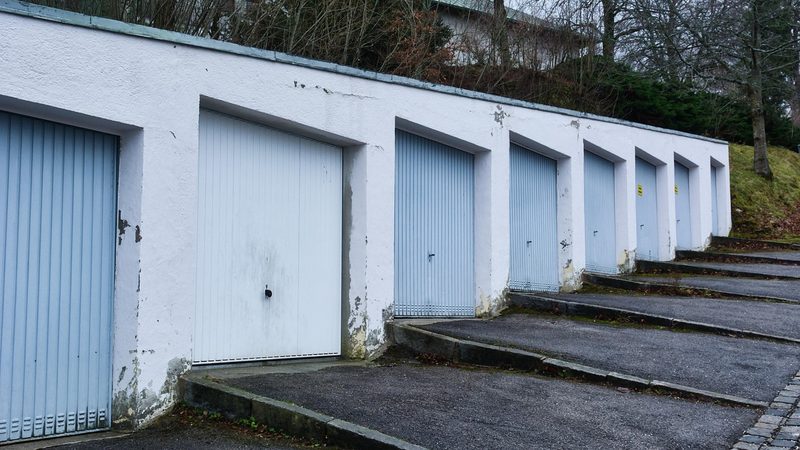
First, check that the roof is actually yours to replace. Some garage blocks are owned by the council or a housing association and rented out, in which case the roof is the landlord's responsibility. Others are sold on long leases or freehold, and the deeds may say who maintains what. On a block where one run of sheets spans several garages, you'll usually need your neighbours on board, because you can't neatly cut out one bay without leaving a weak, leaky joint at each side.
Doing the whole row at once almost always works out cheaper per garage. Scaffolding, waste and asbestos disposal are shared, and a roofer will often knock 15-25% off each garage when they can do six in one visit. If you end up organising it, get one quote for the whole block with a per-garage breakdown so everyone can see what they're paying for.
Planning Permission and Building Regulations
For a like-for-like garage roof replacement, you won't normally need planning permission. Replacing a felt roof with EPDM, or asbestos sheets with steel, counts as repair and maintenance. Things change if you're raising the height, for example swapping a flat roof for a pitched one. Under householder permitted development, an outbuilding within 2m of a boundary is limited to 2.5m high, and most rear-lane garages sit right on the boundary, so a pitched roof there will often need an application. Parts of Southsea and Old Portsmouth are conservation areas, where changes to how a roof looks may need consent too.
Building regulations work differently for detached and attached garages. A detached garage under 30m² with no sleeping accommodation is generally exempt, which covers almost every single garage and many doubles. An attached or integral garage is part of the house, and the government's guide to when you need building regulations approval lists replacing roof coverings as work that can need approval. In practice an unheated attached garage rarely triggers insulation requirements, but if the garage has been turned into a room, a re-roof will need to meet current insulation standards. A good roofer will tell you which applies before they quote.
Repair or Replace Your Garage Roof?
Not every leak means a new roof. A felt roof with one or two splits and a solid deck can often be patched for £150-£350 and given another few years. A single cracked asbestos sheet can sometimes be repaired or sealed, although sheets more than 40 years old tend to crack again nearby. Our rule of thumb is that if more than about a quarter of the roof needs work, or the deck is soft in more than one place, replacement is better value.
Replace rather than repair if:
- the felt is more than 15-20 years old and leaking in several spots
- the timber deck bounces or has visible rot from inside
- asbestos sheets are cracked, crumbling at the edges or heavily covered in moss
- you've already patched the same roof two or three times
As for timescales, a single garage in felt, EPDM or steel is usually a one-day job. A double takes one to two days, and adding asbestos removal puts another half day to a day on top. Pitched tiled garages take two to four days. Most work goes ahead in any season in Portsmouth, though EPDM adhesives and GRP resin need dry weather and temperatures above about 5°C, so winter jobs can slip by a few days.
Frequently Asked Questions About Garage Roof Replacement in Portsmouth
How much does a garage roof replacement cost in Portsmouth?
A single garage typically costs £900-£2,800 depending on the material, with steel sheet at the cheaper end and GRP at the top. A double garage is usually £1,600-£4,500. Asbestos removal and disposal adds roughly £500-£1,100 for a single and £900-£1,800 for a double.
Can I remove an asbestos garage roof myself?
The law does allow homeowners to remove asbestos cement from their own property, but it's not something we'd recommend. The sheets are fragile to stand on, they must be wetted, removed whole and double-wrapped, and you'll still need somewhere licensed to take them. Check with Portsmouth City Council before taking any to a recycling centre, as many won't accept it.
Do I need planning permission to replace my garage roof?
Not usually for a like-for-like replacement. You may need permission if you're raising the roof, such as changing from flat to pitched on a garage near a boundary, or if the property is in a conservation area. Detached garages under 30m² are also generally exempt from building regulations.
What is the best roof for a garage near the sea in Portsmouth?
EPDM is a strong choice for a flat garage roof on a timber deck because it has few or no joins and handles UV and salt air well. For a concrete sectional garage, plastisol-coated steel with anti-condensation backing and stainless fixings is the best value, and composite panels if you need a dry, insulated space.
Ready to work with Roof Repairs Portsmouth?
Let's connect! We’re here to help.
Send us a message and we’ll be in touch.
Or give us a call today at 023 9355 3469
Agency Contact Form
More Marketing Tips, Tricks & Tools