Best Roof Tiles for Portsmouth Homes: Slate vs Clay vs Concrete on the Coast
If you're re-roofing in Portsmouth, the best roof tiles for your house depend less on what looks nice in a brochure and more on three things the city throws at a roof: salt, wind and age. Portsea Island gets roughly 750mm of rain a year, well under the UK average of about 1,160mm, but a lot of it arrives sideways on south-westerlies off the Solent between October and March. More than 40% of homes in the city are terraced, and a big share of those went up between 1880 and 1914 with Welsh slate on slim softwood rafters. Pick the wrong covering and you can add over a tonne of weight to a roof frame that was never designed for it, or put concrete tiles on a street where the council expects slate. On a typical terrace, the gap between the cheapest and the dearest option is £4,000-£6,000. Here's how slate, clay, concrete and the cheaper man-made slates compare on a Portsmouth house, and which one suits yours.
Best Roof Tiles for Portsmouth: What the Coast Changes
Most tile comparisons are written for a sheltered house in the Midlands. Down here the answer shifts.
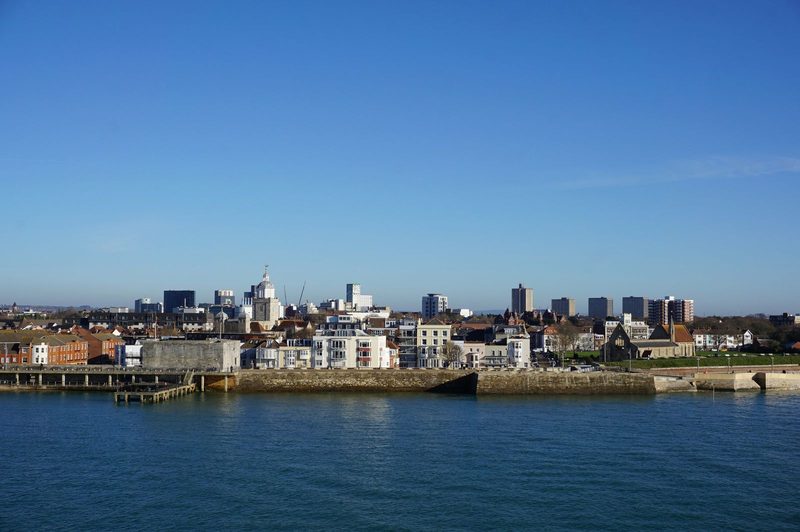
Start with salt. Airborne chloride settles on every roof in Southsea, Eastney and Old Portsmouth, and to a lesser degree across the rest of the island. It eats into the surface of concrete tiles faster than it does slate or fired clay, and it corrodes the wrong fixings in 10-15 years instead of 40. Then there's the wind. A roof here takes stronger and more frequent gusts than the same roof 20 miles inland, so the way the tiles are fixed matters as much as the tiles themselves. And the houses themselves limit your choice. Portsmouth's Victorian and Edwardian terraces have lighter roof timbers than modern houses, often 100mm x 50mm rafters, and that limits how heavy a covering you can put on them.
There's some good news too. Portsmouth has some of the mildest winters in England, with far fewer frosts than inland Hampshire, so frost damage - the main killer of cheap clay and concrete tiles further north - is less of a problem here. If you'd like someone to look at your roof and tell you what it can take, Roof Repairs Portsmouth can survey it and price two or three options side by side.
Natural Slate: What Most Portsmouth Terraces Were Built For
Natural slate is the original covering on most of Portsmouth's pre-1914 terraces and villas. It doesn't rot, doesn't absorb much water, and salt does very little to it. On a Portsmouth roof it typically lasts 60-90 years, and the limit is usually the nails rather than the slate. A good slate roof also weighs roughly 25-35kg per m², which is light enough for the original Victorian timbers.
The downsides are cost and skill. Slate is cut, holed and laid by hand, and a roofer has to grade the slates by thickness as they go. A full natural slate re-roof usually costs 40-70% more than concrete. Slate also needs a pitch of roughly 20-25° or more depending on size and lap, which rules it out for some shallow rear outriggers. On the plus side, sound old slates can often be reused. We still strip 1890s Welsh slates off Fratton terraces that are good for another few decades once they're sorted and re-holed, and they're handy for patching the front slope to match.
Welsh or Spanish slate?
Welsh slate is what most of these houses had first, and it's still the benchmark for durability. It's also the dearest, often double the material price of Spanish slate. Spanish slate is now the most common slate laid in the UK, and the good stuff performs well. The cheap stuff is a gamble. Some lower grades contain iron pyrites, which rusts and leaves orange streaks down the roof within a few years, and it shows up faster in damp, salty air. Ask your roofer for the quarry name and the slate's classification under BS EN 12326 (you want the best grades for water absorption and oxidation, often written as A1, T1 and S1) before you agree to anything.
Clay Tiles: Plain and Interlocking
Clay tiles are fired in a kiln, so they don't rely on a surface coating that can wear away. That makes them handle salt air well and keep their colour for decades. On the coast, handmade or machine-made clay plain tiles usually last 50-80 years, and they're common on some Edwardian and inter-war houses in the north of the city and across the wider Hampshire coast.
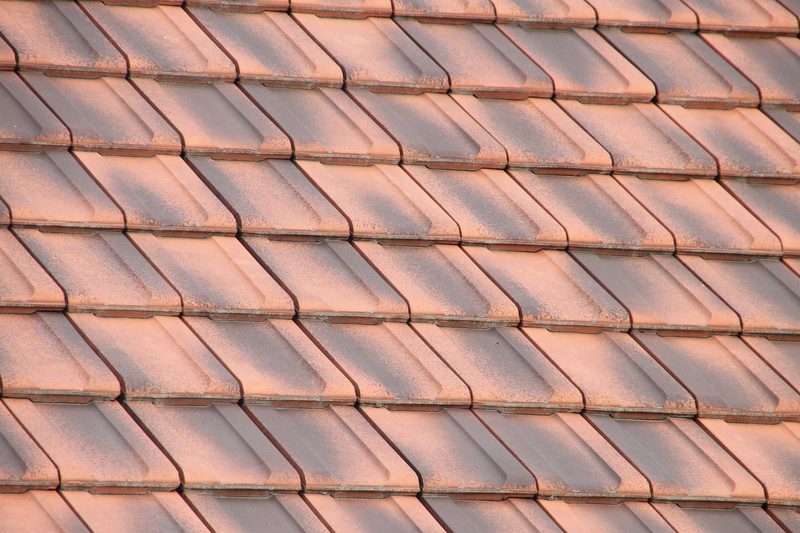
Plain tiles are small and double-lapped, so you need around 60 tiles per m² and the roof ends up heavy, typically 65-80kg per m². They also need a pitch of at least 35°, so they won't go on a shallow roof. Clay interlocking tiles are bigger, lighter (roughly 40-50kg per m²) and can go down to lower pitches of around 22-30°, depending on the product. They're a good middle ground if you want clay without the weight.
For most Portsmouth Victorian slate terraces, clay plain tiles are the wrong swap. They're too heavy for the timbers, and the look is wrong for the street. On a house that already has clay, though, replacing like-for-like is usually the best value over 50 years.
Concrete Tiles: Cheap, Tough and Heavy
Concrete interlocking tiles have been the standard on new houses since the 1950s, and they cover most of Portsmouth's post-war estates in the north of the city, such as Paulsgrove, along with plenty of 1960s-80s re-roofs on older terraces. They're the cheapest covering per m², quick to lay, and good ones cope with wind well because they're big and heavy.
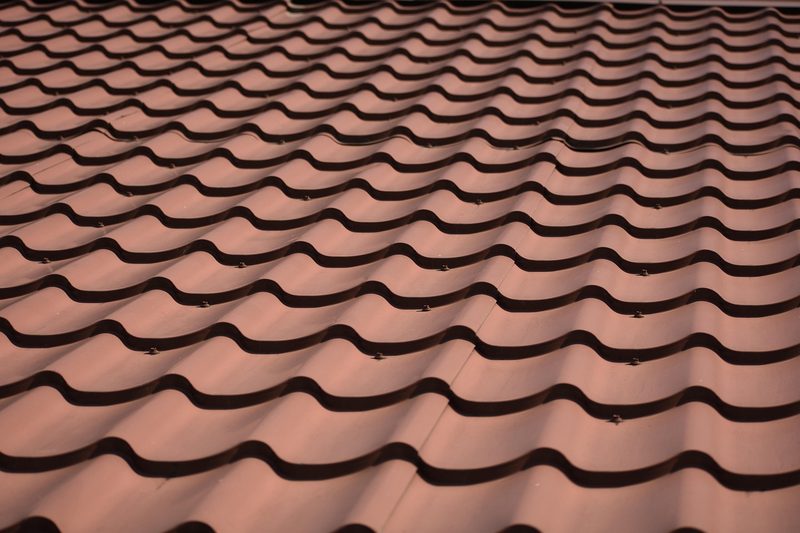
In Portsmouth they wear faster than the manufacturers' figures suggest. Concrete tiles are quoted at 50-60 years, but here they more often give 35-50. Salt and driving rain wear away the surface, the tiles start soaking up water, moss takes hold, and eventually they go soft and brittle at the edges. Weight is the other issue. Concrete interlocking tiles come in at about 45-55kg per m², and concrete plain tiles at 70-80kg per m².
On a 1950s or later house built to take concrete tiles, a like-for-like re-roof with good-quality modern concrete is often the sensible, affordable choice. On a Victorian terrace that started life with slate, it's usually the option we'd talk you out of, for the weight reasons below.
Fibre-Cement and Synthetic Slates
If you want the look of slate without the price or the weight, there are two man-made options.
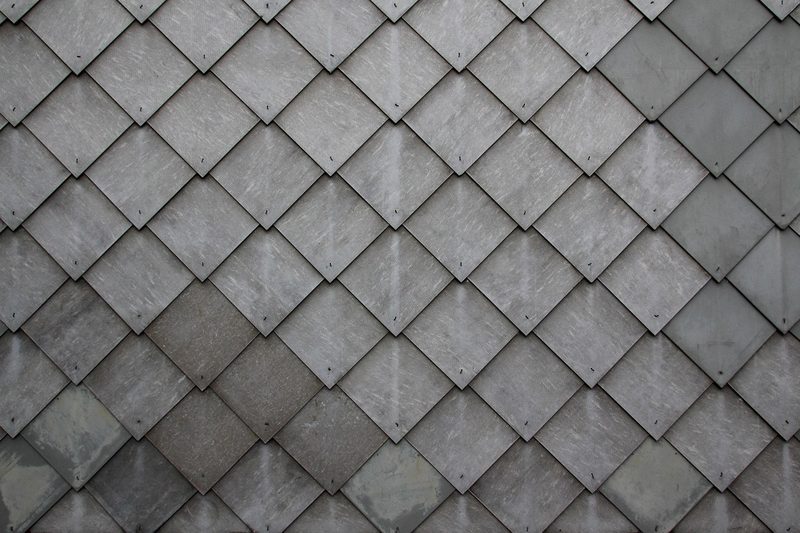
Fibre-cement slates are thin, flat sheets of cement reinforced with fibres. They weigh about 18-22kg per m², cost a little more than concrete to fit, and look very uniform from the street. The catch is life expectancy. Most last around 30 years, and on an exposed coastal roof some start to curl at the edges, fade or grow lichen sooner. They're a fair choice on a rear slope or an extension, less so if you plan to stay for decades.
Synthetic or composite slates are made from recycled plastics, rubber or resin mixes. They're the lightest option at roughly 10-15kg per m², hard to break, and many manufacturers offer 30-50 year warranties. Most products haven't been on UK roofs long enough to prove those numbers in salt air. Some look convincing, some look plastic, so ask to see a finished roof nearby before you commit. Neither type is likely to be accepted on the front slope of a house in a conservation area covered by an Article 4 direction.
Wind, Salt and Fixings: The BS 5534 Bit
Whatever tile you choose, how it's fixed decides whether it stays on in a February gale. The British Standard for slating and tiling, BS 5534, was tightened in 2014. It now expects every tile and slate on a new or re-laid roof to be mechanically fixed with nails or clips, and ridges and hips to be fixed mechanically instead of relying on mortar alone. The roofer should also work out the wind uplift for your exact site, based on its height, exposure and distance from the sea. Portsmouth roofs sit in one of the higher-exposure parts of southern England, so the calculation often calls for extra clips at the eaves, verges and ridge.
The National Federation of Roofing Contractors' guidance on roofing standards is a good place to check what a compliant job looks like, and most reputable roofers will happily talk you through the fixing spec on their quote.
Nails and clips near the sea
Fixings fail long before slate or clay does, and salt speeds that up. On a Portsmouth roof we'd expect copper or stainless steel nails for slate, stainless steel tile clips and slate hooks, and no plain galvanised or aluminium fixings within a few miles of the water. Centre-nailed slates also resist wind far better than head-nailed ones, as the nail sits further from the lifting edge. If a quote doesn't say what the fixings are made of, ask. It's often the difference between a 30-year roof and a 70-year one.
Weight, Planning and Conservation Rules
These are the two things that catch Portsmouth homeowners out most often, and both can turn a cheap re-roof into an expensive problem.
Weight on old Victorian timbers
Swapping slate (about 30kg per m²) for concrete interlocking tiles (about 50kg per m²) adds roughly 20kg per m². On a 55m² terrace roof that's over a tonne of extra load on rafters that might be 120 years old. We regularly see Victorian terraces re-roofed in concrete in the 1970s and 80s where the ridge now sags, the rafters have bowed and the walls have been pushed outwards at the top. As a rule of thumb, a new covering more than about 15% heavier than the old one needs a structural check and building regulations approval. The Planning Portal's guide to roof work covers when re-roofing needs planning permission and building regulations, including weight and insulation. If you re-roof more than 25% of the roof, you'll also usually need to bring the insulation up to current standards, which can add £1,000-£3,000.
Conservation areas and Article 4
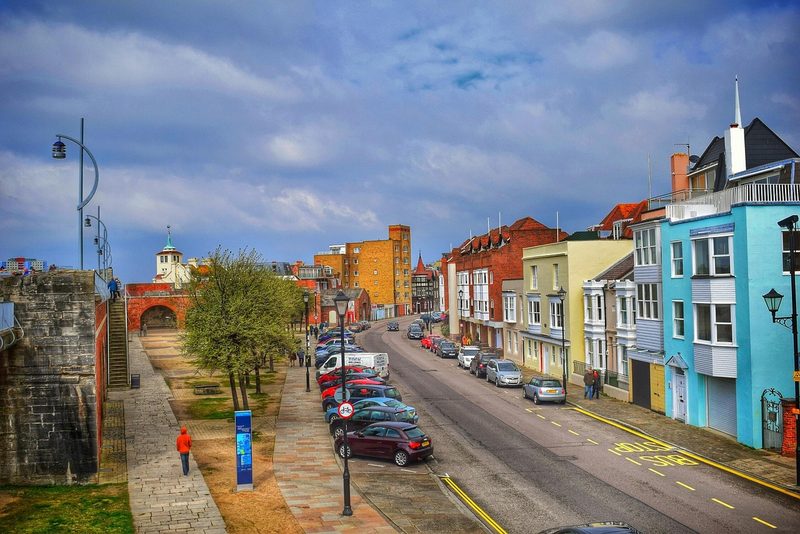
Portsmouth has 25 conservation areas, including Old Portsmouth, Owen's Southsea, East Southsea and Craneswater. Several have Article 4 directions that remove your right to change the roof covering on front slopes without planning permission. In those streets, the council will normally expect natural slate to be replaced with natural slate, and concrete or fibre-cement on the front is likely to be refused. Check your address against Portsmouth City Council's map of conservation areas in Portsmouth before you get quotes, so every roofer prices the right material.
Best Roof Tiles for Portsmouth by House Type and 2026 Cost
Here's how we'd usually steer different Portsmouth homes, though the survey always comes first:
- Victorian or Edwardian terrace in Southsea, Fratton or Old Portsmouth with original slate: natural slate, ideally a good Spanish or Welsh grade. Light enough for the timbers and expected in most conservation areas.
- Same terrace but outside a conservation area and on a tight budget: good Spanish slate on the front, fibre-cement or Spanish slate on the rear. Avoid concrete unless the timbers have been checked.
- Edwardian or inter-war house with clay plain tiles: clay like-for-like, reusing sound original tiles where possible.
- Post-war or modern semi with concrete tiles: modern concrete interlocking tiles, or clay interlocking if you want a longer life.
- Low-pitch rear outrigger or extension: concrete interlocking or a suitable synthetic slate rated for that pitch. Clay plain tiles and most natural slates won't work below their minimum pitch.
How long each one lasts here
Lifespan matters as much as the upfront price, because a roof that lasts twice as long can cost less per year even if it costs more on day one. We've covered realistic figures in more detail in our guide to how long a roof lasts in Portsmouth, material by material, including which parts of the roof give out first.
Typical 2026 costs
These are typical Portsmouth prices for a full re-roof, including stripping the old covering, new breathable membrane, new treated battens, fixings and ridge, but not scaffold:
- Concrete interlocking tiles: about £70-£100 per m²
- Fibre-cement slates: about £80-£110 per m²
- Synthetic or composite slates: about £90-£130 per m²
- Clay interlocking tiles: about £90-£120 per m²
- Spanish natural slate: about £100-£140 per m²
- Clay plain tiles: about £110-£160 per m²
- Welsh natural slate: about £140-£200 per m²
For a typical two-storey Portsmouth terrace with around 50-60m² of main roof, add £900-£1,600 for scaffold and that gives roughly £4,500-£7,500 in concrete, £5,000-£8,000 in fibre-cement, £6,000-£10,000 in Spanish slate, £6,500-£11,000 in clay plain tiles and £8,000-£13,500 in Welsh slate. The gap between the cheapest and dearest option on the same house is usually £4,000-£6,000. Good slate roofers are busier than general roofers in Portsmouth, so expect lead times of 4-8 weeks in autumn and winter.
Frequently Asked Questions About Choosing Roof Tiles in Portsmouth
What are the best roof tiles for a house near the sea in Portsmouth?
Natural slate and fired clay handle salt air best, because there's no surface coating to wear away. Good-quality concrete tiles work too, but they tend to last 35-50 years here rather than the 50-60 quoted. Whatever you choose, use copper or stainless steel fixings.
Can I replace slate with concrete tiles on my Victorian terrace?
Sometimes, but it's rarely a good idea. Concrete interlocking tiles are around 20kg per m² heavier than slate, which can overload original rafters. A covering more than about 15% heavier normally needs a structural check and building regulations approval, and in a conservation area with an Article 4 direction you'd also need planning permission for the front slope.
Is Spanish slate as good as Welsh slate?
Good Spanish slate is a reliable, cheaper choice and is now the most widely used slate in the UK. Quality varies a lot between quarries, though, so ask for the quarry name and its BS EN 12326 grading. Welsh slate costs more but has the longest track record.
How much does it cost to re-roof a terrace in Portsmouth in 2026?
For a typical terrace with 50-60m² of main roof, expect roughly £4,500-£7,500 in concrete tiles, £6,000-£10,000 in Spanish slate and £8,000-£13,500 in Welsh slate, including scaffold. Complex roofs, chimneys and insulation upgrades add to that.
Ready to work with Roof Repairs Portsmouth?
Let's connect! We’re here to help.
Send us a message and we’ll be in touch.
Or give us a call today at 023 9355 3469
Agency Contact Form
More Marketing Tips, Tricks & Tools