Roof Felt Replacement in Portsmouth: Signs of Failed Underlay, Breathable Membranes and 2026 Costs
Most roof leaks in Portsmouth that get blamed on tiles actually come down to what's underneath them. The felt, or underlay, is the roof's second line of defence, and on the city's older houses it's often the part that's quietly given up. Roof felt replacement in Portsmouth comes up on a lot of the homes we look at, because so many of them were felted with bitumen felt between the 1950s and the 1990s. That felt usually lasts 20-40 years. A fair amount of it is now 40-60 years old. The coast doesn't help. Portsea Island gets around 750mm of rain a year, much of it pushed sideways by south-westerly winds off the Solent, and gusts over 50mph come through several times most winters. Wind-driven rain gets past tiles that would keep a vertical downpour out, and when that happens the felt is all that stops it reaching your loft.
What Roof Felt Does and Why It Fails on Portsmouth Roofs
Tiles and slates shed most of the water, but they aren't watertight. Rain blows up under the laps, snow gets in through gaps and condensation forms on the back of the tiles. The felt sits under the battens and catches all of that, then guides it down into the gutter. Without it, or with felt that's torn, the water drips onto your insulation and ceilings.
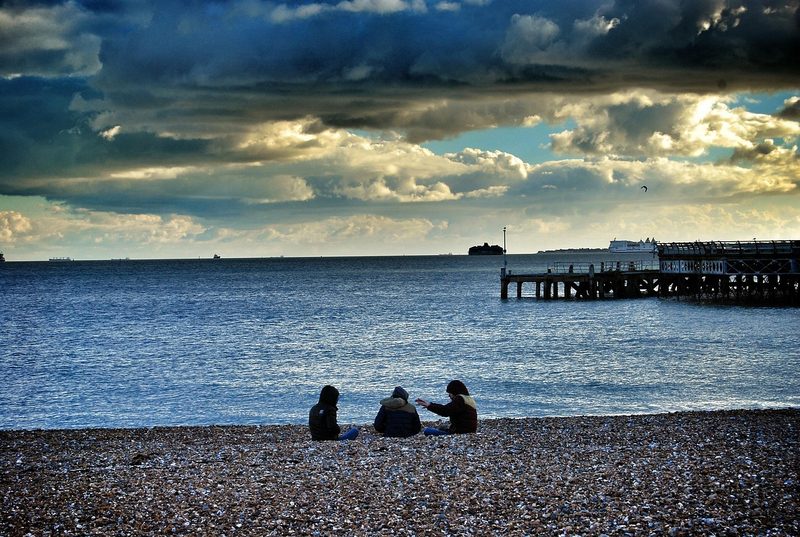
Old bitumen felt fails in a predictable way. It's an oil-based product, and over 30-odd years it dries out, shrinks and goes brittle. The worst of it is always at the eaves, the bottom 300-500mm of the roof where the felt drapes over the fascia into the gutter. That strip gets UV light, heat and every drop of water running off the roof. On Portsmouth houses, the salt in the air speeds things up. Salt crystals draw moisture into the felt fibres, and the constant wet-dry cycling makes it crack faster than it would 20 miles inland.
If you're not sure what state your underlay is in, Roof Repairs Portsmouth can check it from the loft and from the eaves and tell you whether it needs patching or replacing.
Signs You Need Roof Felt Replacement in Portsmouth
You can spot most of these yourself with a torch from the loft hatch. Pick a dry day after a wet spell, as that's when damage is easiest to see.
Inside the loft
- Daylight through the felt. Small pinholes or tears where light comes through mean rain can come through too.
- Felt that crumbles when you touch it. If it flakes or snaps when you press it gently, it has reached the end of its life.
- Sagging between rafters. Felt that has shrunk and torn away from its nails droops in bags, and those bags hold water.
- Damp patches or tide marks on the rafters, battens or insulation, usually lowest down near the eaves.
- No felt at all. Plenty of pre-1930s terraces in Southsea, Fratton and North End were built without any, so you'll see the back of the slates directly.
Outside the house
- Felt hanging in tatters over the fascia board or rotted away so the gutter sits under bare battens.
- Damp, rotting fascia boards or water marks on the wall below the gutter, even though the gutter itself is clear.
- Ceiling stains in the top rooms close to the outside walls, which often points to failed eaves felt rather than broken tiles.
Most felt problems in Portsmouth start at the eaves, so look there first.
Breathable Membrane vs Traditional Bitumen Felt
When underlay gets replaced now, it almost always goes back as a breathable membrane rather than bitumen felt. The choice changes how your loft behaves afterwards, so here's the difference.
Traditional bitumen felt
Often called 1F felt. It's heavy, cheap and completely waterproof in both directions, which means moisture rising from the house can't get out through it. On a cold winter night that moisture condenses on the underside of the felt and drips back onto the insulation. Older roofs got away with it because they were draughty. Add thick loft insulation and that draught disappears. Bitumen felt typically lasts 20-30 years on an exposed coastal roof.
Breathable membranes
Made from layers of polypropylene. They keep liquid water out but let water vapour pass through, so the loft can dry itself. Good ones are rated for 50 years or more, they're far lighter and they don't go brittle in the sun the way bitumen does. In a city where winter humidity sits around 80-85% most of the time, that breathability matters. We've written about the causes of loft condensation and roof ventilation in Portsmouth if your loft is already showing signs of it.
Which one should you choose?
For a full re-felt, a breathable membrane is the sensible choice on almost every Portsmouth roof. It's usually only £3-£6 per square metre more than bitumen felt, which is a few hundred pounds on a typical terrace. Make sure your roofer still allows for ventilation at the eaves or ridge, as most manufacturers recommend it in high-humidity areas. A breathable membrane is not an excuse to seal the loft up completely.
Eaves Felt and Eaves Tray Repairs: The Cheaper Fix
If the felt is sound across most of the roof and has only rotted at the bottom, you don't need to strip the whole roof. An eaves repair deals with just the problem strip.
The roofer removes the bottom two or three rows of tiles, cuts back the rotten felt and fits a rigid eaves tray or eaves protector. That's a strip of plastic that sits over the fascia and carries water straight into the gutter, so the new felt or membrane doesn't sag into a puddle. A new strip of membrane is lapped under the existing felt, the battens are replaced where they're rotten and the tiles go back on.
On a typical Portsmouth terrace with a 5-6 metre run of eaves, this is usually a one or two-day job. On a three-bed semi with front and back eaves, allow two to three days. The catch is that it only makes sense if the rest of the felt is still in decent shape. If it's crumbling halfway up the roof as well, you'd be paying for a repair now and a full re-felt in a few years anyway.
Full Strip and Re-Felt: When It's the Right Call
A full re-felt means taking every tile or slate off, removing the old felt and battens, laying a new breathable membrane, fitting new treated battens and putting the roof covering back on. If the existing tiles are in good condition, most of them can be reused, which keeps the cost well below a full new roof.

It's the right call when:
- The felt is brittle across the whole roof, not just at the eaves.
- There's no felt at all and you're getting leaks or damp.
- The battens are rotten or nail sick, so tiles are slipping in several places.
- You're already paying for scaffold for chimney, guttering or solar work, so the access cost is covered.
Building Regulations and insulation
Re-roofing counts as building work. Stripping more than a quarter of a roof is normally notifiable, and if you re-felt more than half of it the work usually needs to meet Approved Document L of the Building Regulations, which may mean improving the loft insulation at the same time where it's practical. A roofer registered with a competent person scheme can sign this off without you applying to Portsmouth City Council's building control separately. Ask for the certificate at the end, as solicitors will want it when you sell.
Roof Felt Replacement Costs in Portsmouth for 2026
Typical prices, including VAT:
- Patch repair to torn felt from inside the loft: £150-£350
- Eaves felt and eaves tray repair, small terrace (one elevation): £450-£900
- Eaves felt and eaves tray repair, semi or detached (front and back): £900-£1,800
- Full strip and re-felt, two-bed terrace (reusing slates or tiles): £4,500-£7,000
- Full strip and re-felt, three-bed semi: £6,500-£10,000
- Full strip and re-felt, larger detached house: £9,000-£14,000
- Replacement slates or tiles where originals break: £3-£12 each depending on material
- Scaffold for a terrace front and back: £900-£1,800, plus a pavement licence on narrow streets
Prices in Portsmouth tend to run about 5-10% above the national average. Part of that is access. Southsea and Fratton terraces often front straight onto the pavement with no off-road parking, so scaffold and skip arrangements take more organising. The rest is demand. There aren't enough experienced roofers to go round across south Hampshire, and from November to March, when wind-driven rain exposes every weak spot in the city's old felt, good firms are often booked 3-5 weeks out.
For the best price, ask for quotes that list the membrane brand, the batten size (25x50mm treated is standard for most tiles) and whether eaves trays and new ventilation are included. Firms registered with TrustMark or members of the National Federation of Roofing Contractors have been vetted, which gives you somewhere to go if things go wrong.
Should You Replace the Felt or the Whole Roof?
If the tiles or slates are sound, re-felting is usually the better value. Natural slate on a Victorian terrace can easily last another 50-80 years, so stripping it, re-felting and relaying it gets you a near-new roof for roughly 60-70% of the cost of new slate. Concrete tiles from the 1960s to 1980s can generally be reused too, provided they aren't heavily worn or covered in cracks.
It tips the other way when 20% or more of the tiles are cracked, laminating or porous. At that point, the labour to strip and relay is much the same as fitting new, and you end up mixing old and new tiles anyway. A good roofer will lift a few tiles during the survey and tell you which camp your roof is in. If they won't go up and look, get another quote.
Frequently Asked Questions About Roof Felt Replacement in Portsmouth
How much does roof felt replacement cost in Portsmouth?
An eaves felt and eaves tray repair typically costs £450-£1,800 in 2026. A full strip and re-felt reusing the existing tiles costs around £4,500-£7,000 on a two-bed terrace and £6,500-£10,000 on a three-bed semi, plus scaffold.
How long does roof felt last?
Traditional bitumen felt usually lasts 20-30 years on an exposed coastal roof like Portsmouth's, sometimes up to 40 in sheltered spots. Modern breathable membranes are rated for 50 years or more.
Can roof felt be replaced without removing the tiles?
Small tears can be patched from inside the loft, but proper replacement means lifting the tiles. For eaves repairs, only the bottom two or three rows come off. A full re-felt needs the whole roof stripped.
Is breathable membrane better than felt?
For most homes, yes. It keeps rain out while letting moisture escape from the loft, which cuts condensation in Portsmouth's humid coastal air. It also lasts longer and doesn't go brittle in sunlight.
Ready to work with Roof Repairs Portsmouth?
Let's connect! We’re here to help.
Send us a message and we’ll be in touch.
Or give us a call today at 023 9355 3469
Agency Contact Form
More Marketing Tips, Tricks & Tools