Roof Leak Detection in Portsmouth: Tracing Wind-Driven Leaks by Where the Stain Appears, With 2026 Costs
A brown ring on the bedroom ceiling rarely sits under the hole that caused it. Water that gets past a tile on a Portsmouth roof can run 1 to 3 metres along felt, a rafter or the top of a wall before it drips, and that's why roof leak detection in Portsmouth is so often a puzzle rather than a quick look. The city sits on a low island with nothing between it and the Solent, so south-westerly gusts of 40 to 55mph regularly push rain sideways and uphill under tiles, flashings and render. Portsea Island gets roughly 750mm to 800mm of rain a year, and around 60% of it falls between October and March, usually with wind behind it. The result is a leak that appears in one storm, stays dry for the next three, and then comes back when the wind swings round to the south-west again. This guide works backwards from where the stain shows up in your house, explains how a roofer traces the fault, and gives 2026 prices for each method.
Why Roof Leaks in Portsmouth Turn Up Far From the Fault
On an inland roof, most leaks come from rain falling straight down onto a cracked tile. Here, a lot of the water arrives horizontally. A strong south-westerly drives rain against the slope, into the gap under a ridge tile, behind a lead step on a chimney and through hairline cracks in render. Some of the worst leaks we see on Southsea and Fratton terraces happen when the rainfall itself is light but the wind is above 35mph.

Once water is inside, gravity and the roof structure decide where it goes. It follows the underside of old bitumen felt down to the eaves, tracks along a purlin, or soaks into the top of a party wall and comes out on the ceiling of the next room along. On pre-1919 terraces with no felt at all, it can drop onto the loft insulation, spread out, and stain a patch of ceiling 2 metres wide with no obvious centre. If you'd rather have someone look at it than guess, our Portsmouth roofing team can come out and trace it properly before quoting for any repair.
Wind direction matters as much as rainfall. Portsmouth's prevailing wind is south-westerly for roughly 35 to 40% of the year, so the south and west faces of a roof take most of the punishment. A slope facing north-east can be in perfect condition while the opposite slope lets in water every winter.
Roof Leak Detection in Portsmouth: Start With Where the Stain Is
A good roofer starts inside the house, not on the roof. Where the damp appears narrows down the likely causes to two or three, and that saves hours of searching. Here's how the most common stain positions in Portsmouth homes usually map to faults.

A stain on the top-floor ceiling near an outside wall
This is the classic wind-driven leak. On a terrace in Southsea, Milton or Stamshaw it usually means water is getting in at the eaves or along the verge of the gable. Common causes are a slipped or cracked tile in the bottom three courses, felt that has rotted at the eaves so it no longer drains into the gutter, or a blocked gutter backing up under the tiles. Most of them turn out to be within a metre or two of the roof edge.
Damp around the chimney breast
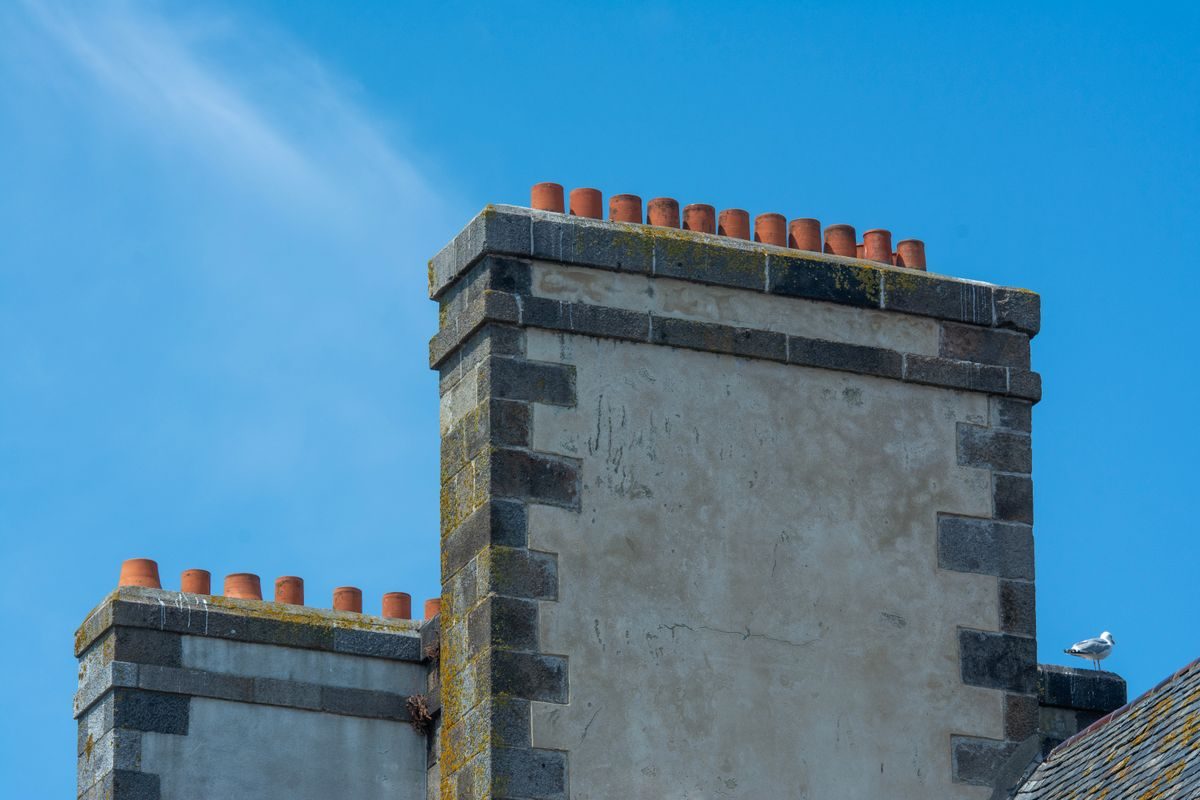
A damp patch on the chimney breast or the ceiling beside it points first to the lead flashings and the chimney itself. Salt air corrodes lead and erodes the mortar holding the flashing in its chase, and south-westerly rain then gets behind the step flashings. Old brick chimneys soak up a lot of water in a heavy storm and can wick it down into the house without any roof fault at all. A cracked crown, missing cowl or porous brickwork is just as likely as a flashing failure.
A stain at the back of the house under the back addition
On Victorian and Edwardian terraces, back bedrooms and bathrooms often sit under the junction between the main roof and the back addition. That junction usually has a valley, a lead soaker run or a shallow pitch, and all three are weak points in sideways rain. We've covered valleys in more detail in our guide to roof valley repairs in Portsmouth, including why they're often the first part of a roof to leak in a storm.
Water above a bay window
Bay roofs are small, shallow and fully exposed on three sides, so they leak far more often than their size suggests. Damp above the bay window inside, or a stain on the ceiling just inside the front wall, usually means failed lead, a split flat covering on top of the bay, or a gap where the bay roof meets the main wall. On a Portsmouth terrace, check the bay before you blame the main roof.
A patch in the middle of the ceiling
A stain well away from any wall, chimney or junction is the one most likely not to be the roof at all. Before anyone climbs a ladder, run through the checks in the next section.
Is It Actually the Roof? Checks Before You Book a Leak Investigation
A fair share of the "roof leaks" we're called to in Portsmouth turn out to be something else, often 1 in 5 or more in a damp winter. A few simple checks can save you a call-out fee.

Start with condensation. If the damp appears on cold, still nights rather than during rain, and the loft has black spotting along the rafters or wet insulation near the eaves, condensation is the likely cause. Portsmouth's mild, humid sea air makes it common here. The government's guidance on damp and mould for rented housing providers has a useful explanation of how condensation differs from penetrating damp, and it applies just as well to owner-occupied homes.
Next, plumbing. A cold water tank, an overflow pipe, a leaking shower tray or a weeping joint on a radiator pipe in the loft can all produce a ceiling stain. If the damp keeps spreading during dry weather, or the stain sits directly under a bathroom, suspect plumbing first. Turning off the water and watching the meter for 30 minutes is a free test.
Then look at the walls. Many Southsea and Gosport houses have rendered fronts. Hairline cracks in render let wind-driven rain into the brickwork behind, and the damp shows up on the inside wall, sometimes right up at ceiling level, where it looks exactly like a roof leak.
Windows are the last common culprit. Failed seals round a top-floor window, or a sill with no drip groove, will let water run down inside the wall in a south-westerly gale.
If none of these fit, and the damp lines up with rain and wind rather than cold nights or water use, it's very likely the roof.
How a Roofer Traces a Leak
No single method finds every leak. Most investigations combine two or three, starting with the cheapest and moving on only if the source is still unclear.

Visual and loft inspection
The roofer checks the roof from ground level, from upstairs windows and from ladders or roof ladders where it's safe, looking for slipped tiles, open joints in the ridge, lifted flashings and blocked gutters. Then they go into the loft with a torch on a wet day if possible, looking for water trails, stained timbers and daylight through the slates. This finds the source in perhaps 60 to 70% of cases.
Hose and flood testing
When the source isn't obvious, the roofer runs water over one small section of roof at a time with a hose, starting low and working upwards, while someone watches inside. On a flat roof or bay, they may dam an area and flood it with 20 to 30mm of water. It's slow but cheap, and it reproduces the leak in a controlled way. A hose doesn't fully copy a 50mph gust, though, which is why some wind-driven leaks still won't show.
Moisture meters
A pin or pinless moisture meter maps how wet the timber, plaster and ceiling are across a room. Readings above roughly 20% in timber point to active water. Mapping the readings shows which way the water is spreading, which helps when the stain has no clear centre.
Thermal imaging
A thermal camera shows wet areas as cooler patches, because evaporating water draws heat out of the surface. It works best on a cool, dry day after rain, and it's especially useful for flat roofs and for finding water trapped under insulation. It shows where the water is, not necessarily where it got in, so it's usually paired with other methods.
UV dye testing
The roofer adds fluorescent dye to water run over a suspect area, then checks the loft or ceiling void with a UV torch. If the dye shows up, that section is confirmed. It's handy when two faults sit close together, such as a chimney flashing next to a valley, and you need to know which one is responsible.
Drone surveys
For tall Victorian villas, three-storey townhouses and roofs with no safe ladder access, a drone can photograph every tile, ridge and flashing in 20 to 40 minutes without scaffolding. Commercial drone operators must follow the Civil Aviation Authority's drone rules, which is worth knowing because parts of Portsmouth sit close to the naval base and other restricted areas. Ask any drone surveyor whether they're registered and how they handle permissions near the harbour.
Roof Leak Detection Costs in Portsmouth in 2026
These are typical guide prices for a house in Portsmouth and the surrounding area, including Southsea, Gosport, Fareham and Havant. Many roofers will knock the investigation fee off the repair if you go ahead with them.
- Visual and loft inspection: £90 to £180
- Hose or flood test (half a day): £150 to £300
- Moisture meter mapping: often included, or £75 to £150 on its own
- Thermal imaging survey: £200 to £450
- UV dye test: £180 to £350
- Drone survey with photo report: £150 to £350
- Electronic leak detection on a large flat roof: £300 to £700
- Full investigation with access equipment, such as a tower or cherry picker: £350 to £800
The repair itself is a separate cost. A replaced tile or two typically costs £150 to £300, re-dressing a chimney flashing £300 to £650, and re-bedding a section of ridge £250 to £500. The point of paying for detection is to avoid a £2,000 repair on the wrong part of the roof.
Why Some Leaks Only Appear in Certain Storms
Plenty of Portsmouth homeowners say the same thing: "It only leaks sometimes." That's normal on an exposed coastal roof. It's also a clue.

Keep a leak diary
Each time the stain grows or drips, note the date, the time and roughly how windy it was. Then check the wind direction for that day. The Met Office UK climate averages give a good picture of how wet and windy the Portsmouth area is through the year, and a weather app's history will show the direction on the day. If the leak only appears with a south-westerly above 30mph, the roofer knows to look at the south and west faces, the windward verge and any flashing facing that way.
Three or four entries across a single winter are usually enough. A leak that only appears with easterly winds, which happen less often here, points to a completely different part of the roof, and knowing that can cut an investigation from a day to an hour.
Photograph everything
Take a photo of the stain each time, with something for scale. Draw round the edge in pencil so you can see whether it's growing. Photos of the loft during rain, if it's safe to get up there, are even more useful.
Booking a Leak Investigation in Portsmouth
Roofers in Portsmouth are busiest from October to February, when the first big storms of the season expose every weak joint at once. Waits of 1 to 3 weeks for a non-emergency leak investigation are common in that window, against a few days in summer. The supply of roofers is reasonable across south-east Hampshire, but the ones who'll spend time tracing a leak properly, rather than quoting for a new roof on the spot, get booked up first.

If water is coming through a light fitting or the ceiling is bulging, treat it as an emergency, turn off the electrics on that circuit and call straight away. Otherwise, collect your diary and photos, and ask for an inspection on a wet day if you can.
When choosing who to call, check whether the roofer is a member of a recognised body. The National Federation of Roofing Contractors vets members and runs a complaints process, and asking for a written report with photos is a reasonable expectation for any paid investigation. Once the real source is found, most leaks we trace are fixed for well under £600.
Frequently Asked Questions About Roof Leak Detection in Portsmouth
How much does roof leak detection cost in Portsmouth?
A basic visual and loft inspection usually costs £90 to £180 in 2026. Hose testing adds £150 to £300, thermal imaging £200 to £450 and a drone survey £150 to £350. Many roofers deduct the fee from the repair if you go ahead.
Why does my ceiling stain appear nowhere near the damaged part of the roof?
Water runs along felt, rafters and the tops of walls before it drips, often 1 to 3 metres. On Portsmouth's exposed roofs, wind-driven rain gets in at the eaves, verges and flashings and then travels some distance inside the roof before it shows on a ceiling.
Can a roofer find a leak when it isn't raining?
Often, yes. Hose and flood testing reproduce rain in a controlled way, UV dye confirms the exact entry point, and thermal imaging can show water trapped in the structure for days after a storm. A leak diary noting wind direction makes a dry-day investigation much quicker.
How do I know if it's condensation and not a roof leak?
Condensation tends to appear on cold, still nights rather than during rain, often with black spotting along the rafters and wet insulation near the eaves. A roof leak usually lines up with rain and strong wind, especially south-westerlies off the Solent.
Ready to work with Roof Repairs Portsmouth?
Let's connect! We’re here to help.
Send us a message and we’ll be in touch.
Or give us a call today at 023 9355 3469
Agency Contact Form
More Marketing Tips, Tricks & Tools